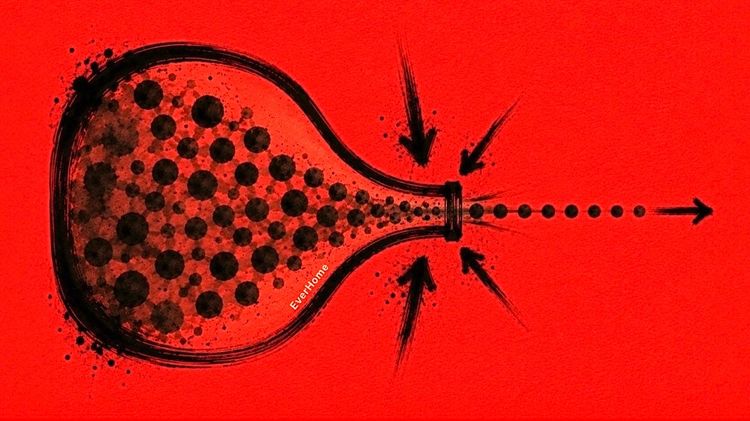

in·cep·tion
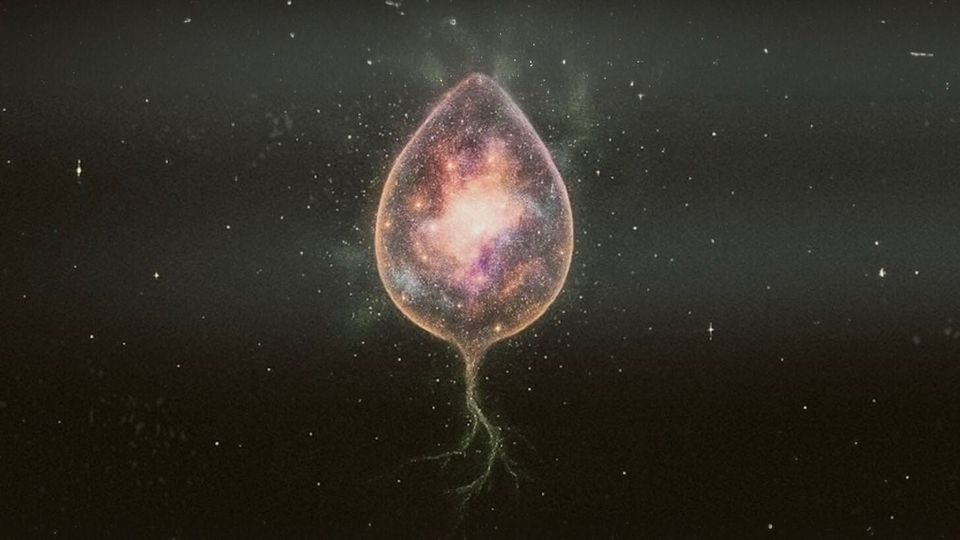
inception (in-SEP-shun)
- The transition of an idea, pattern, or potential from nonexistence into existence.
- The earliest stage at which possibility becomes real, whether or not it has yet become perceptible to human consciousness.
THE LIMINAL SPACE
The ancient meaning of inception concerns the birth of the idea itself. Yet the processes that give rise to that birth are often more liminal or imperceptible in nature, leading to the question:
When an idea appears in the mind, where did it actually come from?
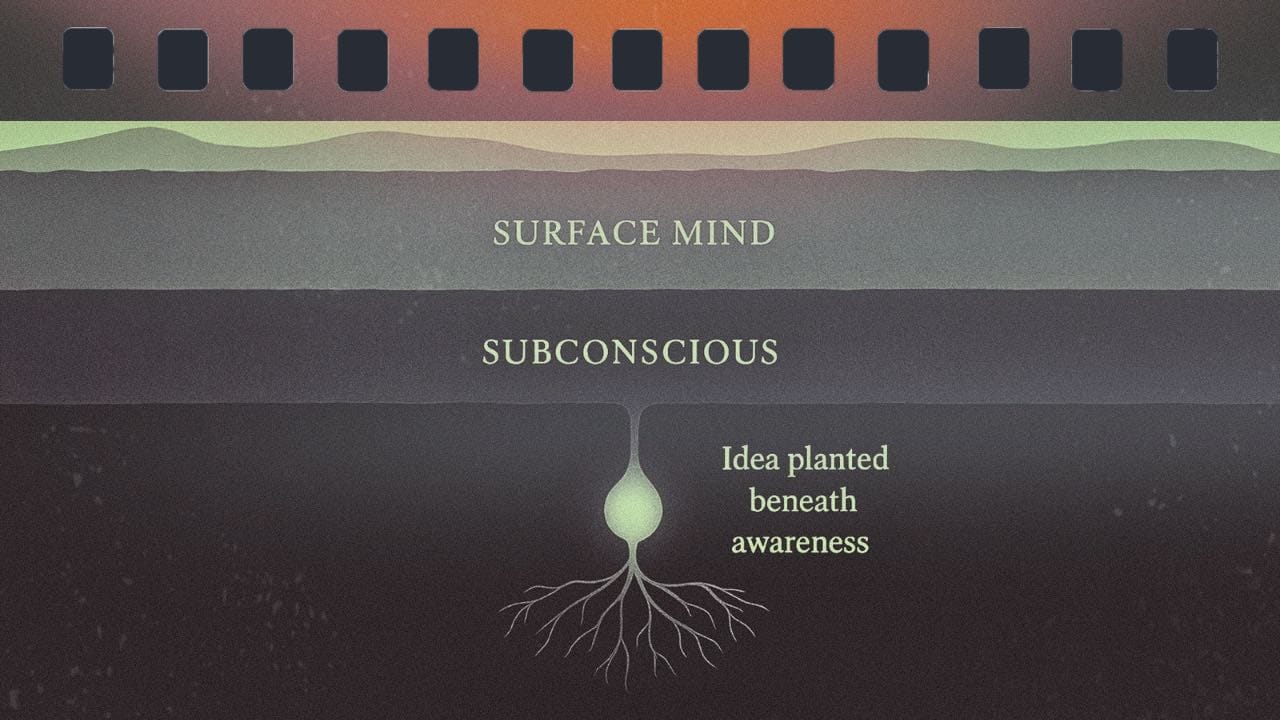
The most interesting aspect of the word inception is that it often occurs below conscious awareness. In this sense, it refers less to the moment an idea becomes conscious and more to the moment the conditions for that idea are first established.
An inception, in this context, suggests that what appears as a sudden idea may actually be the visible emergence of a sequence of events that has been unfolding long before conscious awareness catches up to it.
THE UNDERLYING PROCESS
A person may come across a book, a conversation, an image, a place, or a question. Nothing seems to happen immediately. No belief changes. No conclusion is reached. Yet something has been introduced into the system.
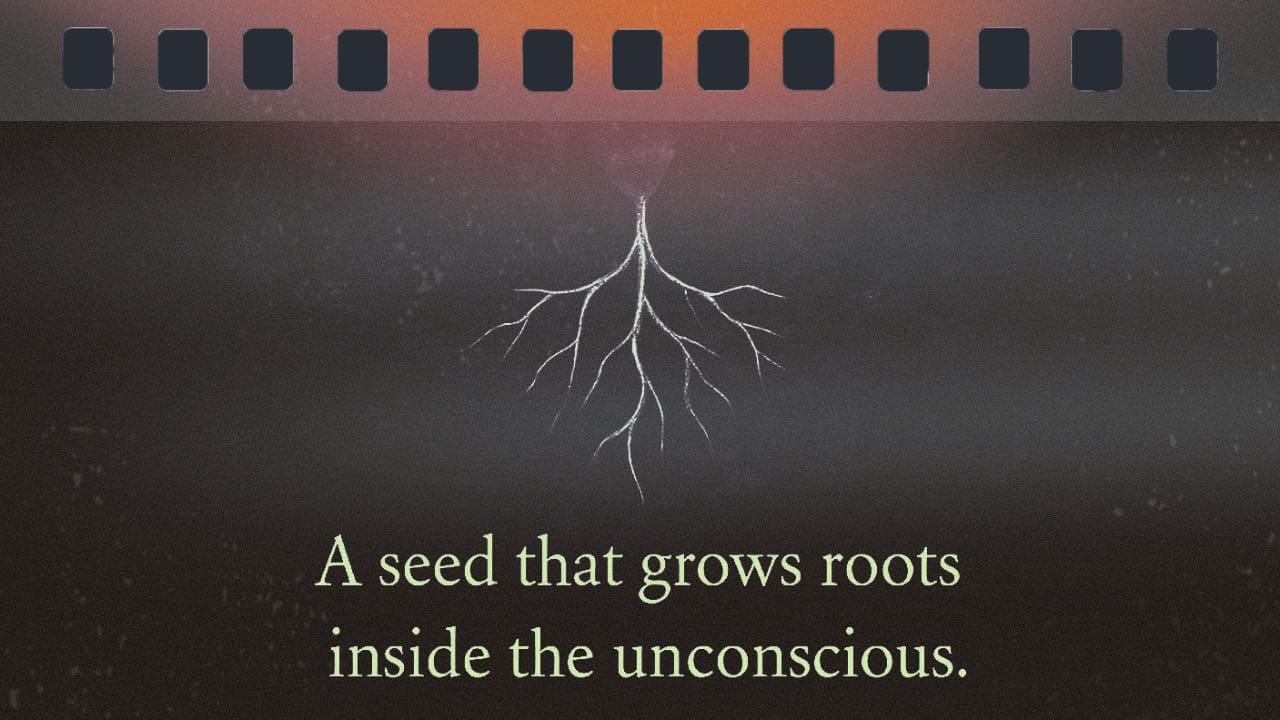
A seed has entered the field.
Days, months, or years later, a thought appears. The person experiences the thought as new because it is new to consciousness. But the inception may have occurred much earlier, at the moment the underlying conditions were first established.
From this perspective, inception is less like a light switch turning on, and more like roots spreading underground before any growth becomes visible above the surface. The visible thought is not the inception. It is the evidence that inception has already occurred. This understanding shifts the focus away from ideas themselves and toward the environments from which ideas arise.
Every idea depends upon prior conditions. Certain experiences, encounters, and thoughts create openings that did not previously exist. They alter the architecture of perception, even when no immediate change is apparent. An inception, therefore, can be understood as the first alteration of that architecture. The person is not yet thinking differently. But they have become capable of thinking differently.
A child may encounter a concept at age ten that means very little in the moment. Years later, the concept becomes central to their life. The inception did not occur when the idea became important. The inception occurred when the idea first entered the system and established a foothold. Likewise, a future relationship may begin long before two people meet. A future worldview may begin long before a belief is consciously adopted. The inception lies in the earliest formation of possibility.
POTENTIAL VS. EXPRESSION
Another way to think about it is that inception occurs at the level of potential rather than expression. Expression is what becomes visible. Inception is what makes visibility possible. This suggests that many of the most significant developments in human awareness begin as subtle shifts in attention, unnoticed impressions, unresolved questions, emotional resonances, fragments of curiosity, or experiences that quietly reorganize the boundaries of what a person considers imaginable.
The conscious mind often takes credit for ideas at the moment they surface. The concept of inception points to an earlier stage—the hidden period during which the ground was being prepared. In its deepest sense, inception is not the birth of an idea. It is the birth of the possibility from which the idea will eventually emerge. When something becomes visible, noticeable, or consciously recognizable, a tendency exists to treat that moment as the point of origin. Yet many phenomena appear only after a long period of invisible preparation. A forest becomes visible after years of root growth. A river changes course after countless small shifts in terrain. Likewise, a thought often emerges only after an underlying structure capable of supporting that thought has already formed.
Before a thought can exist, there must be a mind capable of receiving it, organizing it, and sustaining it. Before a new understanding can arise, there must be a sufficient reconfiguration of perception to allow that understanding to become conceivable.
The thought is therefore not the first event. The first event is the creation of a possibility space.
A person may not yet hold a particular belief, insight, or vision. Yet something has shifted such that the belief, insight, or vision has become possible in a way it was not before.
ENVIRONMENTAL CONDITIONS
The concept of inception directs attention away from ideas themselves and toward the environments from which ideas arise, inviting the question:
How do environmental conditions shape the development of ideas before they take recognizable form?
Ideas do not appear in a vacuum. They emerge from systems of relationships, perceptions, memories, emotional states, cultural influences, biological processes, and countless other factors interacting simultaneously. An environment is not merely a physical location. It is the total field of conditions within which thought becomes possible, therefore, the most significant factor is often not the idea itself, but the nature of the field that produced it.
The same seed planted in different environments produces different outcomes. Likewise, the same information introduced into different minds can generate entirely different insights. The determining factor is not always the information. It is often the structure receiving it. This shifts the focus from products to generative processes. Instead of asking how a thought appeared, one begins asking what made its appearance possible. Instead of studying outcomes, one studies emergence. Instead of examining the visible object, one examines the invisible field from which the object arose. It directs attention toward origins that remain hidden even after their effects become visible, which brings us to the limitations of the conscious mind.
CONSCIOUSNESS
The conscious mind occupies an unusual position. It is the part of experience that can observe itself, construct explanations, and make deliberate decisions. Because it is the portion of cognition most accessible to awareness, it often assumes a disproportionate role in our understanding of how thought works. But the reality is that much of what humans perceive, learn, remember, value, and decide occurs outside conscious awareness. Sensory information is filtered before reaching consciousness. Patterns are recognized before they are articulated. Emotional significance is often registered before it is understood.
Consciousness often encounters the result rather than the process. This creates a peculiar illusion. When a thought surfaces, the conscious mind witnesses its arrival and concludes that the arrival itself is the beginning. It experiences the thought at the moment of emergence and therefore treats emergence as origin. In truth, by the time a thought reaches awareness, a great deal of processing has already occurred.
A person may suddenly understand a problem after weeks of frustration. The insight appears instantaneously. But the conditions that produced the insight may have been developing throughout the entire period. The conscious mind notices the conclusion and overlooks the invisible work that preceded it. Its limitation is therefore not merely that it lacks information, but that it occupies a narrow temporal window. It has privileged access to what is presently appearing but comparatively little access to the processes that generated the appearance.
As a result, consciousness often mistakes revelation for creation. It assumes that because something has become visible, it has just begun to exist. The concept of inception challenges that assumption. It suggests that what appears as a beginning may actually be the first moment at which a much older process becomes visible. The true origin may reside not in the thought itself, but in the prior formation of the conditions that eventually allowed the thought to emerge.
THE INTERSECTION OF INCEPTION AND SUSTAINABILITY
Though conventional ways of thinking about sustainability often focus on sustaining outcomes—keeping a forest healthy, a business operational, or a community intact—some of the more sophisticated theories of sustainability have long recognized that longevity is not achieved by sustaining outcomes directly. Rather, it is achieved by sustaining the conditions that make those outcomes possible. At this point, the relationship between inception and sustainability comes into view.
If inception concerns the formation of possibility, sustainability concerns the continued existence of the circumstances that allow that possibility to endure.
A forest is not sustained because individual trees are protected forever. It is sustained because the conditions that allow forests to emerge and regenerate remain intact. Healthy soil. Water cycles. Biodiversity. Pollination. Seed dispersal. Microbial networks. These are generative conditions. The forest is the visible expression. The ecosystem is the underlying source. Sustainability is concerned with protecting the field from which desired outcomes arise.
Inception asks:
What conditions make something possible?
Sustainability asks:
How can those conditions continue to exist over time?
You could think of them as looking at the same phenomenon from different directions. One is concerned with emergence. The other is concerned with the ongoing viability of emergence. Inception examines the birth of possibility. Sustainability examines the preservation of possibility. Both direct attention away from visible results and toward underlying systems.
This idea extends far beyond environmental contexts. A sustainable creative practice is not merely one that produces art. It is one that preserves the conditions from which art can continue to emerge. Energy. Curiosity. Time. Safety. Inspiration. Skill development. Rest. The artwork is the visible outcome. The sustainable system protects the invisible conditions that generate the artwork.
The same applies to organizations. Many institutions become obsessed with outputs, metrics, and immediate results. They monitor what is visible while neglecting the conditions that produce visibility. Employee trust. Psychological safety. Learning capacity. Community relationships. These are generative conditions. When they deteriorate, the visible outputs may continue for a time. But eventually, the decline becomes apparent because the source has been compromised. The outcomes disappear because the conditions that generated them were not sustained.
Both inception and sustainability challenge a common human tendency to focus on objects rather than processes. We notice the tree and forget the ecosystem. We notice the idea and forget the conditions that made it possible. We notice the visible event and overlook the invisible field from which the event emerged. Viewed this way:
Sustainability can be understood as the long-term stewardship of inception itself.
It is the stewardship of the generative conditions from which new ideas, products, organizations, and achievements can continually emerge. A sustainable system is one that remains capable of producing future inceptions. It protects the possibility of emergence rather than merely preserving what has already emerged.