
Dandelion (Taraxacum officinale)
The Plant
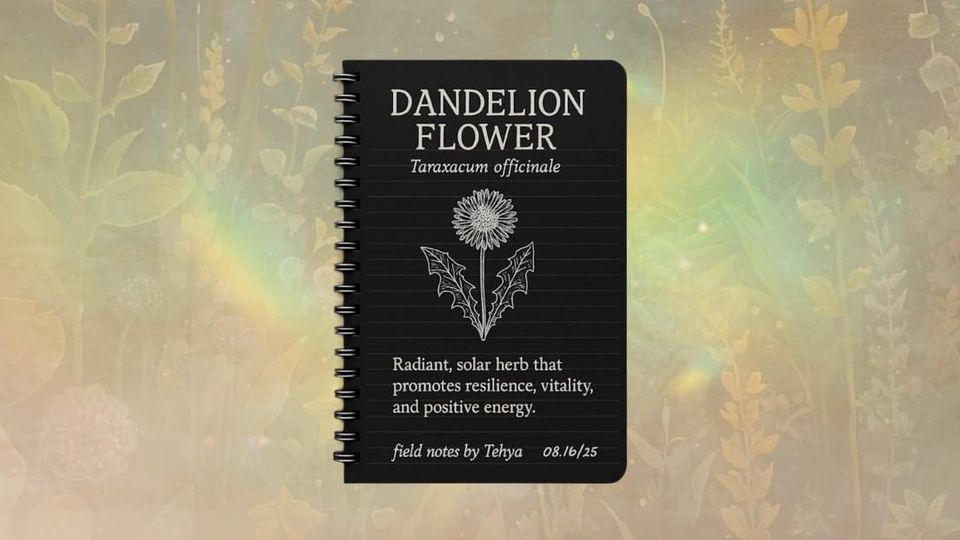
The Dandelion is one of the most recognizable wild plants in the world. It grows as a hardy perennial with a deep taproot that anchors it firmly in the soil. Its leaves appear jagged, which inspired the French name dent-de-lion or “lion’s tooth.”
In spring, the plant sends up bright yellow flower heads that later transform into the familiar white, spherical seed heads, often called “clocks.” Each seed is attached to a delicate feathery parachute, allowing the wind to carry it across fields, sidewalks, and gardens.
Energetic Properties
The Dandelion carries two complementary qualities:
The roots are grounding and bitter, stimulating digestive function and encouraging the movement of bile.
The leaves are cooling and cleansing, gently increasing fluid elimination through the kidneys.
Dandelion helps the body break down fats and support the liver’s natural detoxification processes. It supports the body in clearing stagnation, helping old fluids and metabolic byproducts move out so the system can rebalance.

Working With the Plant Inside the Body
Dandelion is a natural helper for your body’s built-in cleaning systems. While our bodies are designed to stay balanced, modern stress can sometimes make it hard for our organs to keep up. Dandelion supports the liver, kidneys, and lymph system to help everything run smoothly.
Liver and Detox Support
Dandelion is a "bitter" herb that helps your liver produce bile. This is important for breaking down fats and helping your liver filter waste out of your blood. Because it is packed with vitamins and minerals, it nourishes your body while supporting your natural detox process. This internal cleanup helps keep your hormones balanced and your immune system strong.
Kidney and Lymph Health
The leaves act as a gentle, natural way to help your kidneys and lymph system flush out extra salt and water. This helps reduce bloating and keeps your body’s fluid levels steady. Unlike other options, dandelions are loaded with potassium, so they put back the important minerals your body needs while it filters out waste.
Foraging Dandelions for Beginners
Foraging for dandelions is an excellent entry point into herbalism because the plant is easily identifiable and grows nearly everywhere. Use these tips:
Location is Everything
Never harvest from lawns, parks, or roadsides that may have been treated with chemical pesticides, herbicides, or heavy exhaust. Look for "wild" areas or organic gardens.
Timing the Harvest
Leaves: For the mildest flavor, harvest young leaves in early spring before the yellow flowers appear. Once the plant flowers, the leaves become significantly more bitter.
Flowers: Pick these in full bloom on sunny days when they are wide open.
Roots: These are best dug up in the autumn when the plant has finished its surface growth and stored its energy underground.
Identification: Ensure you are picking the "True Dandelion" with a single, hollow flower stalk and leaves.
Spiritual Relationship
In folklore and symbolism, Dandelion is often seen as a plant of resilience and quiet persistence. It grows in places (cracks in sidewalks, dry fields, and disturbed soils) where other plants struggle to survive. For this reason, it has long represented endurance and adaptability.
The seed head carries another layer of meaning. When the feathery seeds are blown into the air, they scatter across the landscape. In folk traditions, this act became a small ritual of sending wishes into the wind. Each seed represents a possibility carried outward and a reminder that even the most overlooked plants hold movement and intention.
✨ Traditional wisdom for modern life—learn which herbs actually regulate your nervous system: