

Your Body Isn’t Failing. Your Environment Is Incomplete.
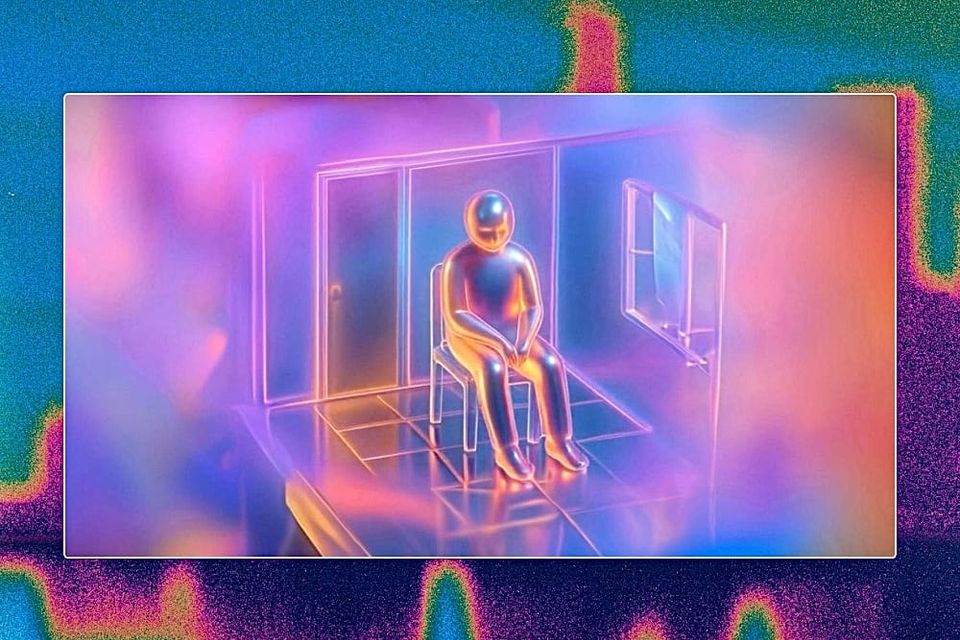
THE MISMATCH
For some people, the world doesn’t come in softly. Light feels sharper than it should. Sound doesn’t fade. It stays.
Even at rest, there can be a quiet sense of alertness underneath everything, like the body never fully settles. This is about how your body interacts with the environment.

In natural environments—under forest cover, along coastlines, or across open land—we are governed by a tempo that favors the body, because it is met by a living rhythm of light, temperature, and touch. It is this specific combination that triggers the Refuge Effect, telling the brain that the perimeter is secure and the body is safe to inhabit itself fully.
Most indoor spaces remove what nature builds in.
WHERE THE SHIFT BEGINS
Make these adjustments to your space so the body can respond the way it does in nature:
LIGHT (reduce input)
In the wild, light is never static; it is a living, breathing element. Overhead lighting, in contrast, keeps everything exposed. It removes the shifts and variation the body expects from natural light, holding the body in a low-level alert state. By shifting away from harsh, "always-on" overhead lighting, you are essentially reintroducing a natural language that your nervous system instinctively understands.
In natural environments, light filters, diffuses, and changes over time. When light builds slowly, warms as it dims, and fades instead of switching off suddenly—the space changes. The edges soften, the body stops scanning, and the room feels containable.
A simple shift:
use a light source that can arrive slowly
let light increase or fade instead of switching abruptly
keep only one low, warm source near you (especially during times of overwhelm)
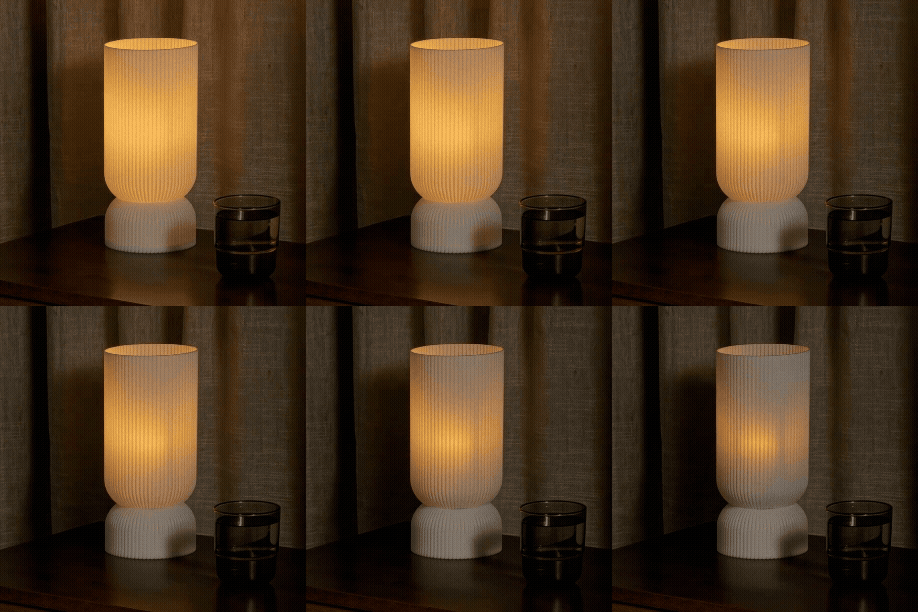
A dimmable, low-positioned source is best—but the quality of the light matters just as much as the control. By using warm-toned lamps (2000K–2700K) and reducing intensity as the evening progresses, you align your internal clock with the Earth’s rotation.
The softened, diffused output will help settle your system as the corners of the room disappear into soft shadows. This "contains" the space for you. Your brain stops trying to monitor the entire room and focuses on the immediate "glow," creating a psychological cocoon similar to sitting around firelight.
When you reduce light input, you aren't just making the room darker; you are making it rhythmical. You are allowing the environment to "breathe" in sync with your energy levels.
TEMPERATURE (remove friction)
If your bedding doesn’t breathe, heat gets trapped, creating friction with the body in ways that are unnatural—whether you notice it or not. Synthetic fabrics (like polyester) act as a plastic seal, trapping heat and breaking your body's feedback loop with its environment.
In nature, nothing is truly "static." Air moves, moisture evaporates, and temperatures shift. In contrast, when bedding traps heat, it creates a false signal of danger or discomfort that your body keeps responding to. The result is constant:
the body remains uncontained
the nervous system stays slightly alert
rest never fully locks in
Not because something is wrong—but because something is missing.
The Nature Connection: Breathable fibers help to fill that gap, allowing your body to perform its natural cooling processes, as it would in the wild.
By allowing heat to dissipate, you are living in a "flow state" rather than a stagnant pocket of artificial warmth. Think of the fabrics you sleep on as an environmental input. Natural fabrics carry the memory of the plants they came from. They have a specific weight and breathability that feels "honest" to the skin, helping you feel physically situated in a real, tangible world rather than a manufactured one.
When made well and cared for properly, it isn’t something you replace often—it’s something you rely on, night after night. Use an organic sateen sheet set that holds up nightly for years, or even simpler cotton sets that still carry what matters: the ability to breathe, to soften over time, and to stay consistent against the skin. The experience doesn’t have to be excessive to be effective.
You simply need to stop fighting your bed and start resting within it, much like the grounded feeling of laying on cool grass or clean earth.
PRESSURE (create containment)
When you lie in sand, it shapes to you. When you enter water, it surrounds you. When you rest on a forest floor, the ground receives your full weight. You are met. Fully. Without gaps. Most modern spaces don’t hold you this way.
A tool of substance, like a weighted blanket, will recreate that "met" feeling intentionally through a physiological mechanism called Deep Pressure Stimulation. You’re essentially using a tactile tool to biohack your nervous system into a state of safety. Much like a firm hug or swaddling a baby, this pressure triggers a shift in your autonomic nervous system.
This isn’t abstract—it’s neurological.
The weight of the blanket applies proprioceptive input: think deep, consistent pressure that tells your brain exactly where your body is. The body will tell you quickly what weight works best for you. It should feel noticeable, but not restrictive. What to look for:
around 8–12% of body weight
even weight distribution (no clumped filling)
breathable outer fabric
The weight of the blanket draws a clear line: this is your body—this is where you begin and end. That clarity becomes containment. A boundary that feels like a fortress. The physical sensation becomes the loudest signal in your environment. Stronger than the noise. Stronger than the drift. And in that shift, mental quiet happens. For a sensitive system, this changes everything. But without that boundary, you’re taking in everything:
the room’s tone
other people’s stress
your own past and future looping at once
It builds. Your energy scatters. Exhaustion follows. When weight is introduced, the hierarchy shifts.
Other ways to introduce calming pressure
The connection between weighted tools (shoulder wraps, lap pads, blankets) and natural environments lies in how both regulate our autonomic nervous system. While one uses physical pressure and the other uses sensory immersion, they both aim to move the body from a "high-alert" state to a "rest-and-digest" state.
Think of a weighted tool as a portable grounding environment: a way to introduce physical containment into spaces that lack it.
The moment weight is placed across your shoulders (like when you use a weighted shoulder wrap) or across your hips (like when you use a weighted lap pad), your body recognizes it as a heavy embrace that says: you’re here now. you don’t have to keep scanning. And your nervous system answers automatically: safe.
The weight doesn’t just calm you once—it trains you. Through repetition, your system builds cellular memory:
weight = containment
containment = safety
safety = home
Eventually, the response becomes immediate. The weight acts as an anchor. It doesn’t just press down; it pulls you back into your own body, providing the "holding" we usually have to seek from others or from the Earth itself. It mimics the sensation of being cradled without the demand of interaction.
Let the environment hold first
Weight is powerful, and it works best when the environment is already doing part of the work:
A room that’s slightly cool with breathable fabrics that carry the memory of plants.
Light that is designed specifically to calm your system and "contain" the space for you.
Then the weight is added as the layer that allows everything else to settle.
Start with one shift.
Then build from there.
When the body is finally met
Some bodies don’t rest because they’re never fully met. Not by the space. Not by the surfaces. Not by anything consistent enough to allow them to feel safe enough to stop adjusting. When the environment becomes steady, the body follows.