

The Reconstruction of Source Code
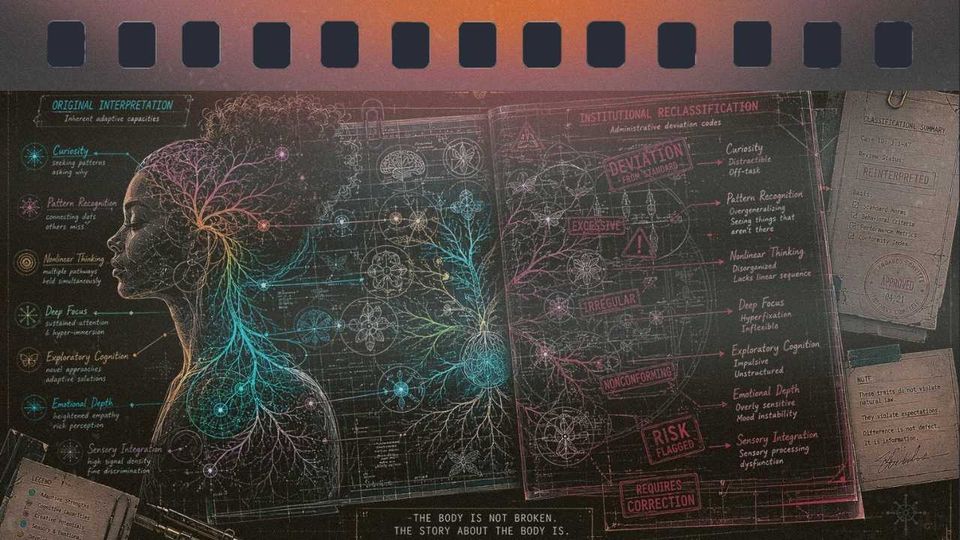
[THE LIMITS OF INTERPRETATION]
The prevailing institutional systems that mediate modern life—schools, workplaces, healthcare organizations, bureaucracies, and regulatory structures—share a preference rarely stated openly:
PREDICTABILITY.
The more predictable a person is, the easier they are to interpret, categorize, and accommodate within existing structures. This arrangement tends to hold up until it encounters someone whose qualities exceed its framework. A mind that sees patterns others miss, has an imagination beyond familiar boundaries, unusual perceptiveness, or an intensity that defies explanation, cannot be easily standardized.
When someone exceeds the level of complexity that an existing structure was built to accommodate, the burden of adaptation rarely falls on the structure itself. It falls on the individual.
They are encouraged to become more reasonable, more controlled, and more easily understood. Those who experience life with unusual depth are often taught to regulate it before anyone considers whether that depth might contain information worth understanding. Because most institutions assume that the existing model is sufficient, what exceeds it is reassigned as a problem within the individual. Over time, people begin monitoring their own intensity, editing their instincts, and restricting their ambitions.
They learn to experience their greatest capacities as liabilities, compressing them until what was once distinctive becomes muted, what resisted categorization becomes easier to classify, and what challenged existing assumptions becomes less threatening. The surrounding structure experiences this as success. The individual often experiences it as safety.
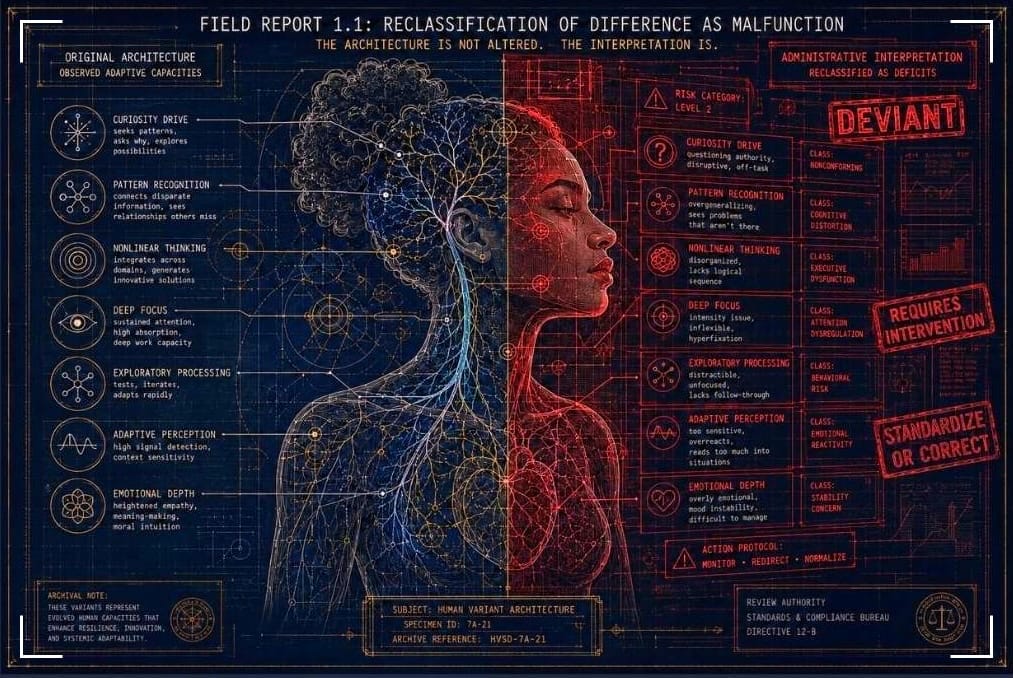
[THE SAFETY SCRIPT]
The Safety Script is the collection of beliefs, authority structures, and cultural narratives that teach a single lesson: safety is achieved through self-reduction. Under its logic, legitimacy comes from external validation and unusual capacities are controlled rather than cultivated.
Growth becomes risk. Full self-expression becomes threat. Valuable aspects of the individual remain dormant because they create tension with systems never designed to recognize them. The individual is taught that survival depends upon remaining smaller than they are.
What is presented as safety is often just planned obsolescence for human potential.
[INSTITUTIONAL FORMATTING]
The first function of the Safety Script is to sever worth from the individual and relocate it into institutions. Legitimacy is treated not as an inherent human quality, but as something granted by authority. From an early age, people learn that recognition must come from outside of themselves. Degrees, titles, and credentials certify competence.
Institutions and their representatives become the mechanism through which value is measured and acknowledged. Over time, this conditioning begins to feel like truth. A person may possess extraordinary insight, creativity, perception, or ability, yet still hesitate to trust any of it without institutional approval. The message remains consistent: you are not valid unless an external authority confirms that you are. The result is a population that looks outward for permission rather than inward for confirmation. The Safety Script depends upon this.
People who trust their own perception are difficult to control; those who require validation before acting are far easier to manage. Their relationship with themselves becomes mediated through gatekeepers who determine what is valuable and what is not.
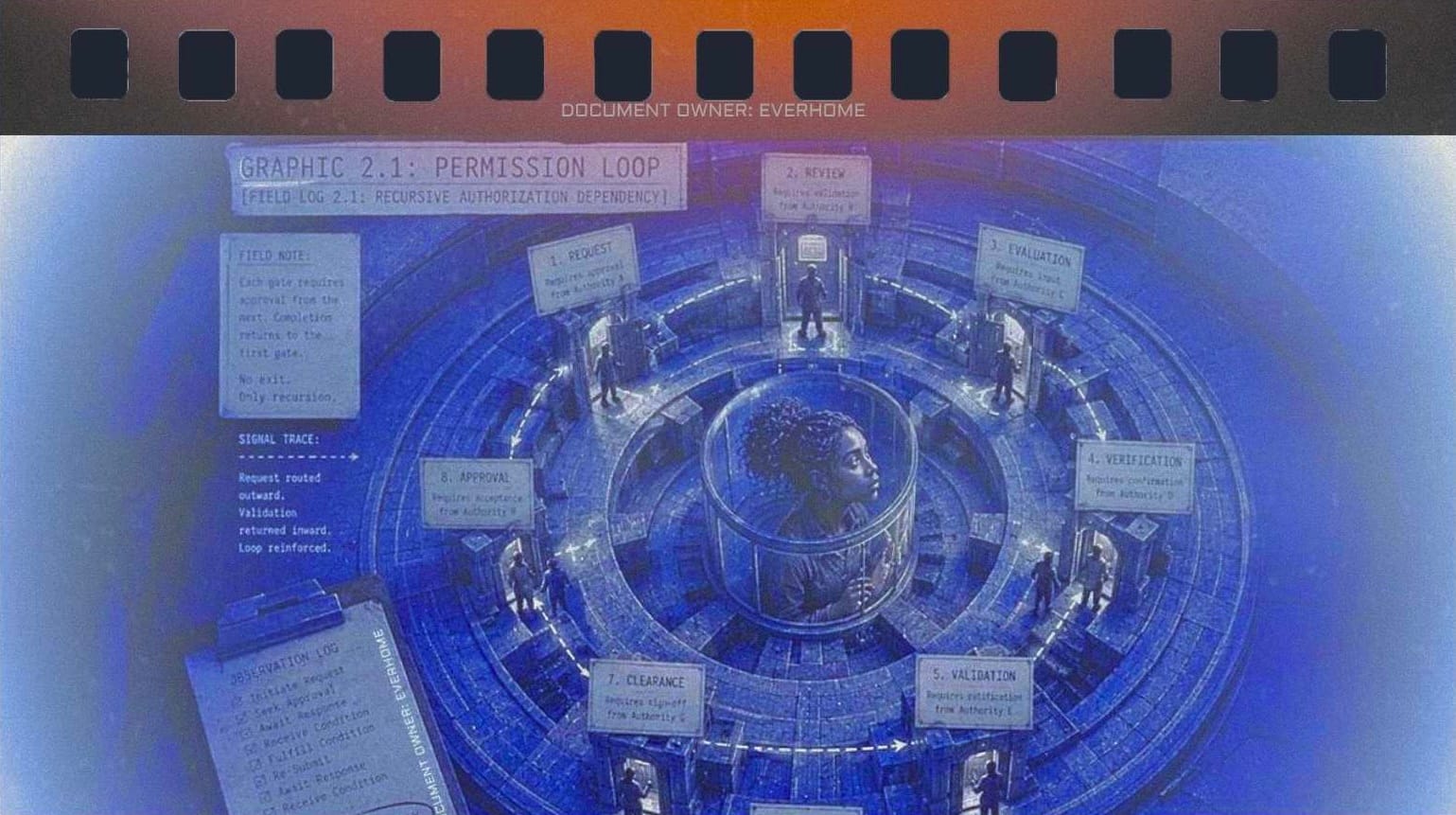
[THE EXTERNAL VERIFICATION LOOP]
Institutional conditioning eventually expands into culture itself where individuals are further taught that understanding their own experiences requires outside validation. As a result, they are directed toward intermediaries: the guru, the diagnostic authority, the specialist, the coach, the professional interpreter of human experience.
Self-knowledge becomes outsourced as the individual ceases to function as the primary authority on their own experience.
[THE DOCTRINE OF STAGNANT SURVIVAL]
Once external authority becomes the source of legitimacy, it gains the power to define what Safety means. The Safety Script teaches people to anchor themselves to what is familiar. Existing limitations become incorporated into identity until expansion feels dangerous and remaining unchanged feels responsible.
The result is perpetual compression. A person remains unrealized as they operate below capacity, while believing they are being prudent.
[THE FALSE TRANSITION LOOP]
The Safety Script rarely tells people to stop. It tells them to prepare. Learn more first. Build more certainty first. Refine the plan first. Wait for better timing.
The promise is always the same: action is coming, just not yet.
What makes this mechanism effective is that preparation creates the sensation of movement. Information accumulates. Plans become more detailed. The person feels productive because they remain engaged with the thing they want.
Meanwhile, very little changes. The business remains unbuilt. The move remains unmade. The transition remains theoretical. Entire futures are constructed in the imagination.
The Script does not need to prevent movement. It only needs to postpone it indefinitely. As a result, many people spend years orbiting the life they claim to want, revisiting the same decisions and gathering information they already possess. Preparation provides temporary psychological relief, creating the illusion of progress. This is why over-researching and under-executing so often appear together. This is presented as careful planning. In practice, it is suspended action.
[THE SLOW & STEADY PATH]
Not everyone can be persuaded to abandon their aspirations outright. For those individuals, ambition is redirected rather than suppressed. This appears throughout the dominant philosophies surrounding business, achievement, and growth in the form of the Protocol of Incrementalism. Under its logic, a person may still pursue success, but only in ways that existing structures can comfortably recognize.
The dream survives, but under supervision. It is put through a compliance review and returned in a more administratively acceptable form: smaller in scale, longer in timeline, and more familiar in trajectory. That is not merely strategy. It is domestication.
The people who reshape industries, build entirely new systems, or alter the direction of culture, rarely arrive in forms that existing structures immediately understand. Before they are celebrated, they are often viewed as unrealistic, premature, disproportionate, or disruptive. This is why anomalous excellence produces resistance before admiration.
The Safety Script appears in different domains and speaks through multiple authorities, but its effect remains remarkably consistent. Individuals are encouraged to withhold trust in their own perceptions, authority, and capacities until they have been reviewed by something external. Temporary delays become permanent arrangements as the search for recognition becomes a holding pattern. Yet the problem is never presented as the waiting itself. More often, it is presented as the solution.
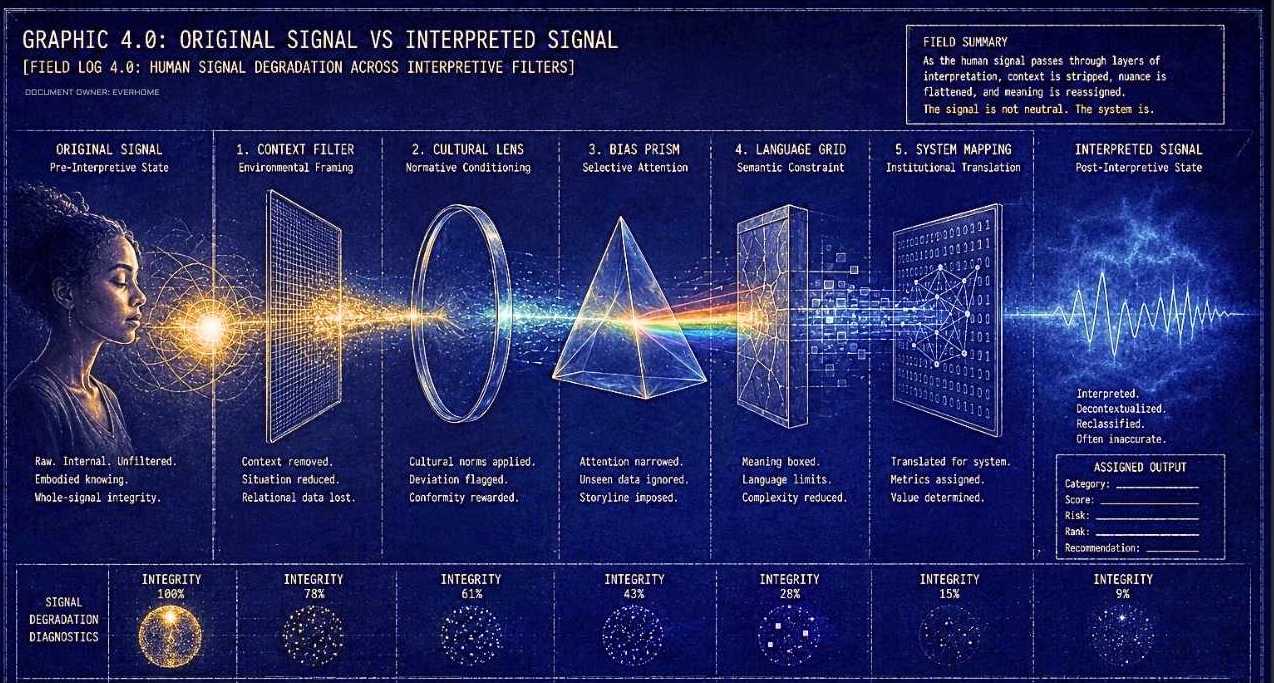
The deeper reality is that waiting for gatekeepers to validate your Vivid Power is a form of Personal Inertia.
WHO ARE THE GATEKEEPERS?
The Safety Script relies upon institutions, industries, and credentialed authorities that define normality, identify deviation, and establish the categories through which people are understood. These gatekeepers include clinicians, employers, accredited institutions, classification systems, administrators, and other experts who position themselves as arbiters of human functioning. Their role is not merely administrative. It is interpretive. They do not simply respond to reality. They claim the right to define it.
[THE SHADOW HANDLERS]
These are the ones who take experiences that resist easy categorization and translate them into established systems of meaning. When uncertainty arises, the Shadow Handler provides an explanation. It may appear as a diagnosis, theory, model, treatment plan, assessment, or coaching methodology.
Although the individual experienced the event, the Shadow Handler claims authority over its meaning by translating it into categories that can be documented, measured, and managed. This process is presented as clarification, but functions as standardization. Its greatest success occurs when the framework disappears from view and becomes the unquestioned lens through which reality is understood.
[THE EFFICIENCY AUDITORS]
The Efficiency Auditors determine whether individuals fit the operational requirements of an institution. Human Resources departments, university administrators, corporate bureaucracies, and middle management all perform this function.
Although their standards appear objective, they largely measure compatibility with institutional expectations. The preferred individual is consistently available, verbally fluent, capable of operating within micromanaged schedules, and able to maintain a steady stream of measurable output that is easy to observe, compare, and manage.
People who process information nonverbally, work in cycles of intensity, require periods of isolation, or generate value in ways that resist immediate measurement, are often assessed through standards that were never designed to recognize their strengths.
Those who align with institutional rhythms are rewarded. Those who do not are frequently viewed as deficient. The result is a system that often mistakes conformity for competence.
[THE LOGIC TRAP]
Within these models, vivid individuals are encouraged to see limitation where there is capacity. Intensity becomes instability. Sensitivity becomes vulnerability. Nervous system responses become evidence of fragility.
The less confidence that individuals place in themselves, the more confidence they are encouraged to place in external interpreters. The consequence is a steady expansion of gatekeeper authority.
Balancing the scales means returning interpretation to its proper place. Institutional classifications may serve administrative purposes, but they do not define the person to whom they are applied.
[THE TOXICITY OF MIS-TRANSLATION]
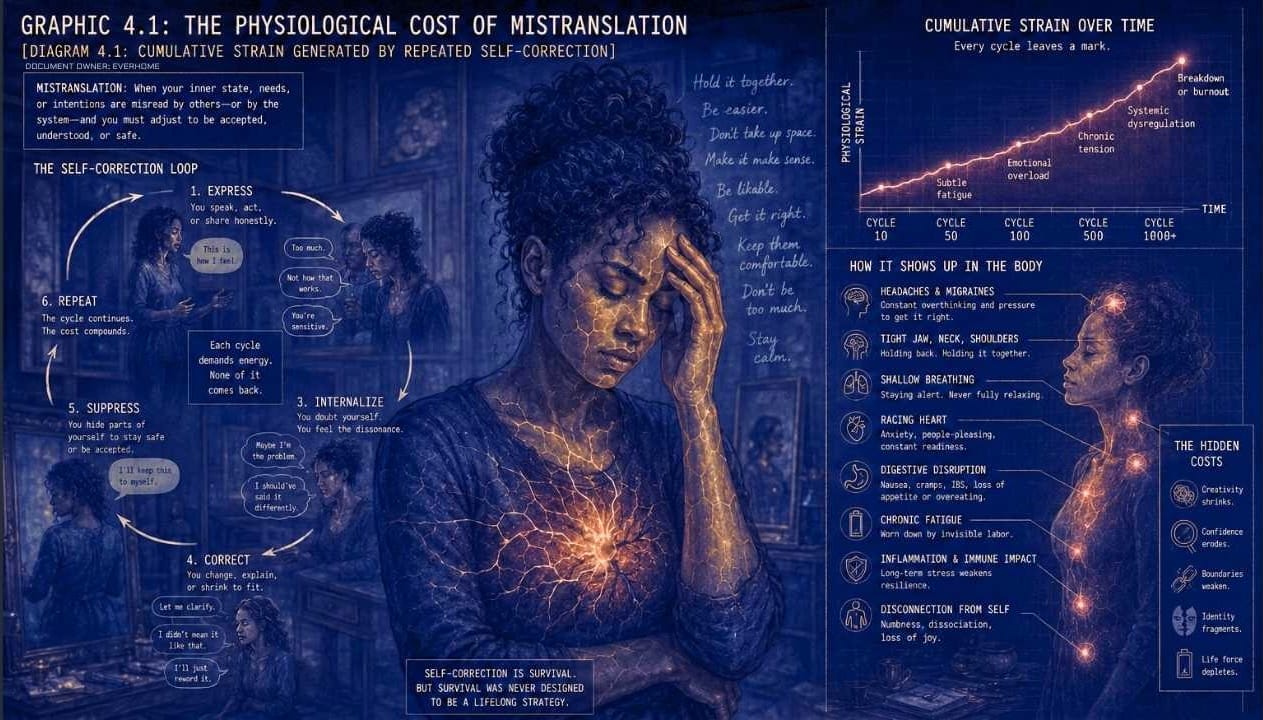
When these gatekeepers repeatedly misread an individual, those interpretations begin exerting physiological pressure. Many people respond by entering a continual process of self-correction, masking, and adaptation. The nervous system absorbs the cost.
Energy that could have been directed toward creation or mastery is redirected toward managing distortion. Over time, this produces inner erosion. The resulting exhaustion is often treated as confirmation of the gatekeepers’ original judgment, but what appears to be dysfunction is frequently the physiological consequence of sustained mistranslation.
[BREAKING THE IDEA OF LOYALTY TO GATEKEEPERS]
One of the most effective gatekeeping mechanisms is teaching people that loyalty is inherently virtuous. Relationships become something to preserve regardless of consequence, while separation becomes associated with failure.
The relationship-debt trap occurs when energy that could support personal expansion remains trapped in maintaining an increasingly restrictive system. The relationship persists because ending it feels wrong, not because it remains beneficial.
[SOURCE CODE AND LOW-RESOLUTION SYSTEMS]
Source Code is the original operating architecture of the individual: the patterns, capacities, instincts, sensitivities, perceptual structures, cognitive tendencies, and organizing logic that exist prior to institutional interpretation.
A low-resolution system attempts to understand that complexity through simplified categories. Precision is sacrificed for legibility and variability is compressed into manageable classifications. Information exceeding the framework’s available resolution becomes difficult to interpret accurately.
The result is a framework that confuses its model of the individual with the individual themselves. The person operates from Source Code. The gatekeeper operates from a reduction of it.
[PATHOLOGIZATION AS A LOGISTICAL SHORTCUT]
People who exceed available classifications create a problem for standardized systems. Their existence introduces uncertainty and raises the possibility that the model may be incomplete. Large systems often avoid that conclusion. Instead of questioning the framework, they question the individual. The anomaly becomes evidence of dysfunction.
Compliance becomes health. Resistance becomes pathology. The individual adapts, assuming they are fixing a flaw when they are actually reshaping themselves to fit the limitations of the system observing them.
[OBSOLETE CODE]
The gatekeepers’ systems are products of industrial-era compliance architecture. They were designed for standardized environments and managed populations, not for sovereign individuals.
High-definition perception, intuitive intelligence, nonlinear processing, extreme sensitivity, multidimensional pattern recognition, and vivid internal architecture exceed the assumptions built into that framework. When confronted with those qualities, the system interprets the individual through categories that predate them.
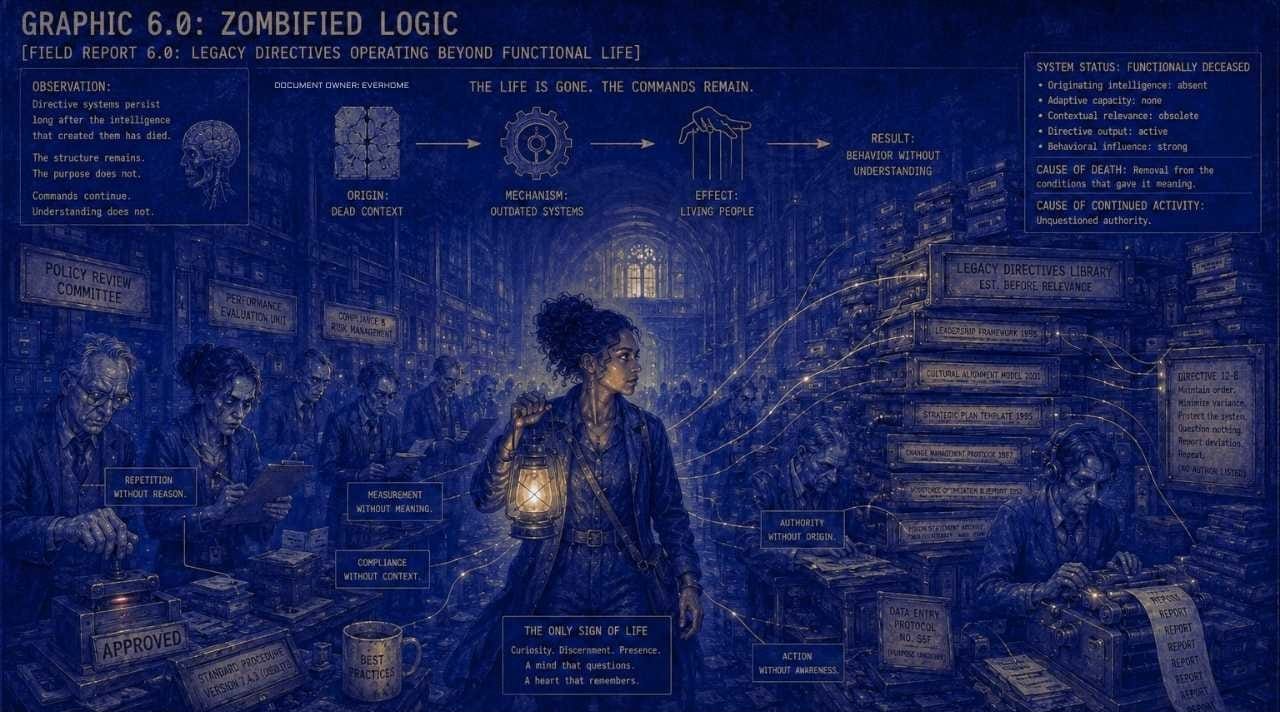
The gatekeepers who promise renewal are often selling stagnation with fresh packaging. Their best practices are zombified logic: old commands still moving after the life has gone out of them.
THE DECONSTRUCTION
Their doctrines require the individual to become less original, less disruptive, less sovereign, and more compatible with the infrastructure that misread them in the first place.
INSTITUTIONAL FORMATTING [DECONSTRUCTED]
The conversion of sovereign beings into compliant worker forms is not merely psychological. It carries material consequences. Human effort is redirected toward institutional objectives, while institutions accumulate the value produced within their frameworks. Their apparent power is organized human energy directed toward a common end.
The tragedy is that much of this energy never reaches self-directed expression. Individuals contribute to institutional expansion, and their participation becomes mistaken for self-realization. The process is complete when that distinction becomes invisible. Human energy, time, and labor receive a place within the expansion, rather than ownership of it.
THE EXTERNAL VERIFICATION LOOP [DECONSTRUCTED]
The external verification loop functions as a transfer of authority. The individual begins with reality. The gatekeeper begins with an explanation of reality. The purpose of the loop is to reverse their positions.
The person has an experience that would ordinarily constitute knowledge. The Safety Script intervenes before that knowledge can stabilize, introducing doubt. The gatekeeper becomes the recognized authority on a reality they never experienced, while the individual who lived it becomes the least trusted participant in determining its meaning.
The inversion is complete.
THE DOCTRINE OF STAGNANT SURVIVAL [DECONSTRUCTED]
This doctrine systematically favors present discomfort over future possibility. Immediate emotions are treated as more significant than future outcomes because they are felt directly, while transformation remains hypothetical. This creates a distorted form of judgment.
The costs of action are scrutinized, while the costs of inaction remain largely invisible. Success becomes measured by what has been avoided rather than what has been achieved. As a result, possibilities that could fundamentally alter the trajectory of a life are often abandoned and long-term becoming is sacrificed for perceived short-term protection.
THE FALSE TRANSITION LOOP [DECONSTRUCTED]
This Loop depends upon a fantasy of perfect timing. The individual is encouraged to believe that somewhere in the future exists a moment when uncertainty will be sufficiently reduced, information sufficiently complete, confidence sufficiently high, and action is finally appropriate.
That moment does not exist.
Reality never arrives carrying complete instructions. Every meaningful undertaking begins under conditions of partial information. The doctrine therefore demands something reality cannot provide: the elimination of ambiguity before participation.
The result is an endless cycle of preparation, in which each round of readiness creates justification for another. The Loop persists by treating readiness as the prerequisite for participation when participation is often the prerequisite for readiness. Waiting is not the absence of risk. It is simply a different form of it.
THE SLOW & STEADY PATH [DECONSTRUCTED]
This Script presents itself as a philosophy of sustainable progress. Its authority rests on the assumption that cautious, incremental movement is superior. Meanwhile, institutions continue extracting labor, markets continue consolidating power, and organizations continue absorbing human attention, creativity, and time.
The future that the individual intends to build remains deferred, while existing systems continue expanding. The promise is that the delay will eventually be rewarded, but this never fully arrives because the threshold keeps moving.
In some instances, patience is a useful tool. In others, it becomes latency, avoidance, or a mechanism through which opportunities expire. The individual looks backward and sees years of preparation. The system looks backward and sees years successfully annexed.
The gatekeepers teach individuals to accept the boundaries around them as natural, moral, and necessary. The vivid, high-resolution person attempts to compress complexity into low-resolution formats designed for administrative control. The body registers the violence of that contradiction.
The nervous system crash that follows is not proof of defect or brokenness, but proof of incompatibility with institutional demands for self-reduction.
A BRIEF CASE STUDY
Creativity was never a hobby in my life. It is both infrastructure and the mechanism through which I process reality. It is how disparate observations become meaningful patterns, allowing technical, emotional, sensory, and intuitive information to be integrated into a coherent whole.
When medical professionals prescribed treatments that dulled my perception, flattened emotional range, or reduced access to imagination, the effect reached directly into the machinery through which I process experience. Corporate and standardized environments often imposed a parallel pressure, attempting to dilute my originality. The result was persistent friction between my divergence and systems built around categorization.
[MEDICAL CONTEXT]
One of the most difficult aspects of insufficient treatment is that failure is experienced asymmetrically. When a medication fails, the physician records an unsuccessful outcome. But the patient is the one who must live inside it, absorbing the disrupted sleep, impaired thinking, emotional dysregulation, appetite changes, physical instability, and gradual loss of psychological anchoring. These consequences do not occur on a chart. They unfold hour by hour inside the body itself.
On more than one occasion, my experience crossed beyond what could reasonably be described as a side effect. During one such period, after being placed on a cocktail of medications intended to address symptoms from multiple angles, my physical condition began to deteriorate.
I began losing consciousness on a near-daily basis, collapsing from a standing position and hitting my head on the floor with increasing frequency. This adverse reaction was not an isolated event. It was a repeating pattern that lasted several weeks.
Eventually, my physical condition deteriorated into a complete collapse witnessed by a family member who called emergency services. At the hospital, staff explained that my system had essentially shut down beneath the cumulative burden of too many incompatible medications. The body was not adjusting. It was failing.
A later integrative practitioner determined that the conditions being treated did not accurately describe what was happening inside my body. The medications did not merely miss the target. They were aimed at the wrong target entirely.
When worsening symptoms are reported, the response is often another dosage adjustment or an additional prescription. The individual is then left to absorb the physiological aftermath they produce.
It is profoundly demoralizing to watch professionals repeatedly arrive at the wrong conclusion while remaining responsible for carrying every consequence inside your own body. When this pattern repeats without meaningful reassessment, it ceases to be ordinary trial-and-error medicine and enters ethical territory.
My story is therefore less a confession of vulnerability and more a case study in the heartbreak experienced by countless individuals taught to use extreme interventions to mute their own intensity and divergence.
Gatekeepers watch vivid nervous systems struggle inside low-resolution worlds and conclude that the person is malfunctioning.
Rarely do they question whether the framework used to interpret that person has become obsolete.
[THE INTERNAL REBUILD]
The rebuild began when I realized the “old self” I was trying to repair was merely the system’s model of me organized around deficiency, not my authentic nature. The more I deliberately stepped away from the gatekeepers’ logic, and took time to examine it, the more it resembled a containment structure, rather than a description of reality.
One of the most powerful forms of conditioning is geographical. Rigid systems often encourage people to believe that the environment surrounding them represents the full range of available options. The experts are here. The opportunities are here. The solutions are here. Leaving can begin to feel irresponsible.
My relocation broke that illusion.
It was not a vacation, a sabbatical, or a temporary escape designed to provide relief before returning to the same conditions. It was a strategic extraction. I was physically removing myself from the environments that had produced years of misdiagnosis, escalating costs, and ineffective interventions.
My current location, therefore, serves a narrative function beyond geography. It represents proof of exit. I am not imagining what happens beyond the gatekeeper’s city. I am writing from the other side of the gateway.
Once outside, the contrast became unmistakable in ways that were immediately evident. Entire categories of healing and ways of living that support the human vessel existed beyond those environments. Practical remedies appeared. The quality of care improved. The financial burden decreased.
However, to manage the glorification of this process, I admit with candidness that this evidence of a greater range of possibilities, was also accompanied by an intensive internal purging process.
[THE DELETION PHASE]
The deletion of this false, external authority was followed by long stretches of silence and periods where no obvious signal remained. The old identity had been deleted, but the replacement had not yet emerged. No certainty. No validation. No proof that anything productive was occurring.
Yet beneath that silence something more important was happening. I was recoding internally. The absence of signal did not indicate failure, though it often felt that way toward the beginning of the transition. Instead, it was the nervous system reorganizing around different assumptions. A period of trying to understand the appropriate lens through which to view the body, when it was no longer treated as evidence of malfunction.
The architecture of my physiology was rebuilding itself around function rather than pathology, and my mind had to consciously synchronize with this new way of being.
[THE EMERGENCE OF SOURCE CODE]
What emerged was not a repaired version of the disorder narrative. It was a way of understanding myself organized around primary Source Code, rather than institutional interpretation. The body came back online. Creativity returned as a functional necessity, rather than a symptom. Intensity returned as capacity, rather than pathology.
The result was not correction. It was restoration.
Today, I view my health work differently, because I am not attempting to repair a broken woman. I am calibrating a high-voltage vessel and restoring coherence between the body and its original architecture, while flushing out years of compliance conditioning.
My search for practitioners centers the people who view the body as an integrated system, rather than a collection of isolated symptoms. These are the ones who understand that human beings exist at the intersection of biology, emotion, environment, relationships, and lived experience.

Entire systems depend upon convincing certain people that their greatest strengths are problems requiring management, reduction, or correction.
The reconstruction of Source Code must begin by rejecting that premise.
HIGH-VOLTAGE CAPACITY ENGINEERING
The deepest wound is not sensitivity or divergence. It is being conditioned to experience those qualities as pathology. Sensitivity is infrastructure. It functions as a form of perception that detects information, patterns, emotions, and truths that others often overlook. Those most eager to dismiss it are frequently the least equipped to understand it. Seeking validation from such people is a losing proposition because they are judging a capacity they do not possess. Their approval is therefore meaningless.
The transformation occurs when the individual stops identifying as a patient awaiting correction and begins acting as an architect of their own conditions. Self-care becomes infrastructure building. Boundaries become structural supports. Holistic living becomes engineering. Environment becomes voltage management. What was once interpreted as a burden is understood as a specialized form of awareness.
The final result is sovereignty.
The attuned individual becomes a builder of high-voltage architecture expansive enough to support the intensity that naturally exists within them. They become a designer of responsive, human-centered methodologies and an architect of frameworks capable of expressing their highest capacities.