

The Mortar and Pestle
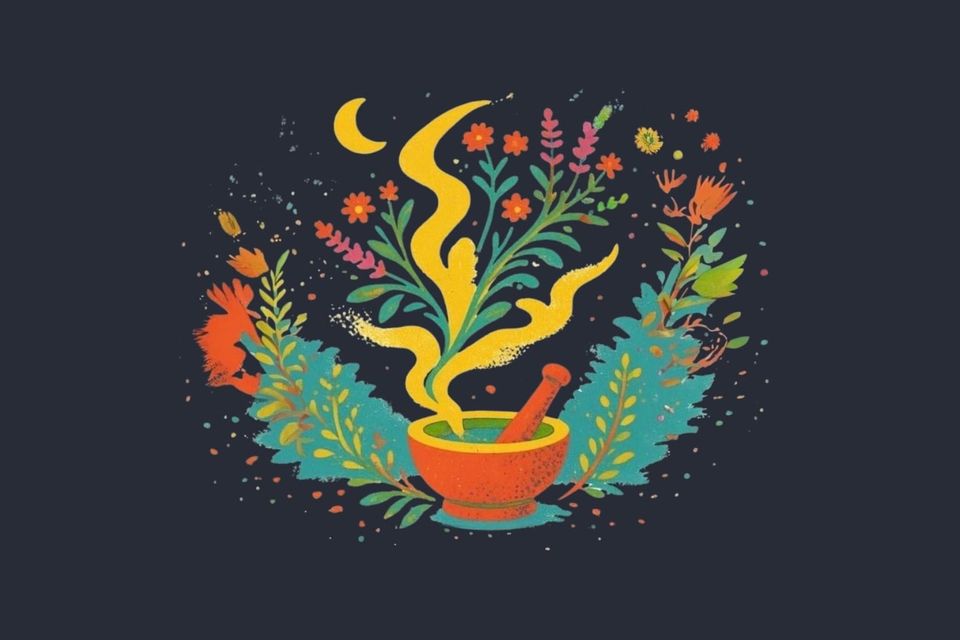
An Ancient Apothecary Tool
Long before herbs came in capsules, tincture bottles, and powdered blends, plants were prepared by hand. Leaves were crushed. Seeds were cracked. Roots were slowly broken down so their scent, oils, and medicinal compounds could be released.
The mortar and pestle is one of the oldest tools used for this work—and one of the simplest. At first glance, it can seem almost too basic to matter. But anyone who has ever crushed rosemary between their fingers knows what happens next. The air changes.
Why Opening the Plant Matters
Plants are designed to protect what they contain. Aromatic oils stay tucked inside leaves. Spice hides inside seeds. Resins harden. Roots become dense and fibrous. When plant material remains whole, much of what makes it useful stays protected there. Opening the plant changes that.
Lavender becomes more fragrant. Mint turns brighter and sharper. Cardamom suddenly smells warm and alive.
The shift is immediate. This is why a mortar and pestle remains useful far beyond tea. It can be used to bruise herbs before oil infusions, crack seeds and spices before cooking, grind botanicals into bath salts or body powders, prepare incense blends from resins, or open tougher plant material before steeping. It is less a tea tool than a plant preparation tool.
Not Every Plant Needs the Same Treatment
Some herbs are easier to access.
Chamomile and lemon balm soften quickly. Peppermint also responds almost immediately.
Others are more guarded.
Ginger root. Cinnamon bark. Cloves. Fennel seed. Rosemary. Frankincense.
These are built to hold tightly to what they contain. A mortar and pestle helps you get past the surface.
How to Use It
The goal is not to turn everything into powder. Usually, that is unnecessary. Instead, you are looking for the moment the plant begins to shift.
Place a small amount in a bowl. Use slow pressure and circular motion. Then wait for the first rise of scent. That moment is often enough.
For delicate herbs, a gentle bruising works beautifully. For roots, seeds, bark, or resins, more pressure may be needed. Then the plant is ready.
Returning to Simplicity
Working with plants does not require elaborate equipment. Sometimes all you need is a simple tool, a handful of herbs, and enough attention to notice what changes when the plant begins to open.