
A MIND BEYOND THE CONTAINER

| Walls Closing In |
When an individual’s unique essence or experience has no valid outlet within existing social, institutional, or ideological structures, the rigidity of those external frameworks can make that person feel as though the walls of a sealed room are closing in around them, with no way out. Retreating inward becomes the only space left for the person to turn. But when someone with an expansive inner life is forced to contain their entire reality within themselves, that refuge can quickly become claustrophobic too. The boundaries of mind and body begin to feel too narrow to contain the fullness of who they are.
It becomes a trap within a trap.
Inadequate external structures leave no room for authentic existence, while the inner world eventually buckles under the strain of containing everything the outer world could not accommodate.
| Funeral Tones |
The rhythm and tone of Emily Dickinson’s “I felt a Funeral, in my Brain” captured my attention as a teenager, long before I fully understood its underlying meaning. When I later examined what Dickinson was expressing, the haunting blend of beauty and melancholy in her language felt deeply relatable.
• I felt a Funeral, in my Brain •
The poem is widely understood as an exploration of psychological collapse — the gradual breakdown of reason and the coherent self. Rather than depicting a literal death, Dickinson transforms the ritual of a funeral into a metaphor for losing control of one’s own mind. Yet she never identifies a concrete external circumstance that sets this inward funeral in motion.
That omission matters because it leaves an open space within the poem for readers to bring their own lived experiences into its meaning. For me, what Dickinson leaves unexplained becomes an invitation to imagine what might exist beyond the poem’s boundaries and to ask:
What circumstances could drive a person into an internal experience so profound that it feels like a funeral within the mind?
| The Person-Structure Mismatch |
The systems that organize human life provide frameworks through which people navigate their experiences and bring their individual capacities into the world. Sometimes these frameworks fail, betray their stated purpose, or become oppressive. But sometimes the problem lies not in failure, but in a profound mismatch between the structure and the person. Even a properly functioning system can become a form of confinement when it offers no adequate space for an individual’s particular abilities.
If that mismatch persists long enough, the psychological burden of remaining chronically unaccommodated can become severe enough to threaten a person’s internal stability. Under such circumstances, the mind can easily slip until it drops completely out of shared reality. Through this lens, the breakdown depicted in “I felt a Funeral, in my Brain” does not have to originate entirely within the individual. It can instead illuminate what happens when the surrounding institutions, social rules, belief systems, or support networks cannot adequately accommodate the fullness of that person’s experience.
The sequence then becomes:
external structures prove inadequate
↓
the individual absorbs what those structures cannot hold
↓
internal capacity becomes overwhelmed
↓
Sense, Mind, and finally Reason break down
| Psychic Entrapment |
I understand the sense of entrapment that can arise when you do not relate to the structures around you or the people who move comfortably within them, yet feel there is no way out. I learned early that when the external world provides no meaningful frame for your experience — nothing that recognizes it, reflects it, or gives it somewhere to belong — the pressure eventually turns inward. Something inside begins to give way. This reality has often caused me to withdraw into solitude as a form of self-preservation, creating distance from others, sometimes with the urgency of trying to prevent an internal collapse.
In grade school, I was always searching for places of retreat: nooks, corners, empty rooms, hidden staircases — anywhere that offered as much distance as possible from the surrounding world. The rituals of the institution and its collective patterns ceased to hold meaning very early on. Instead, they became overwhelming noise that actively destabilized my mind.
The desire to be away from the places designed to contain me, as well as the people within those walls, was not just a want or hope. It was my deepest metaphysical need. And there was not a single human being who existed as an exception to it. Every day that I was required to return to those spaces created a conflict inside that extended far beneath the surface, reaching me at the psychic level. When I arrived home seeking relief, I found no refuge there either. Across these environments, the same pattern repeated itself: the containers designed to hold me were fundamentally inadequate.
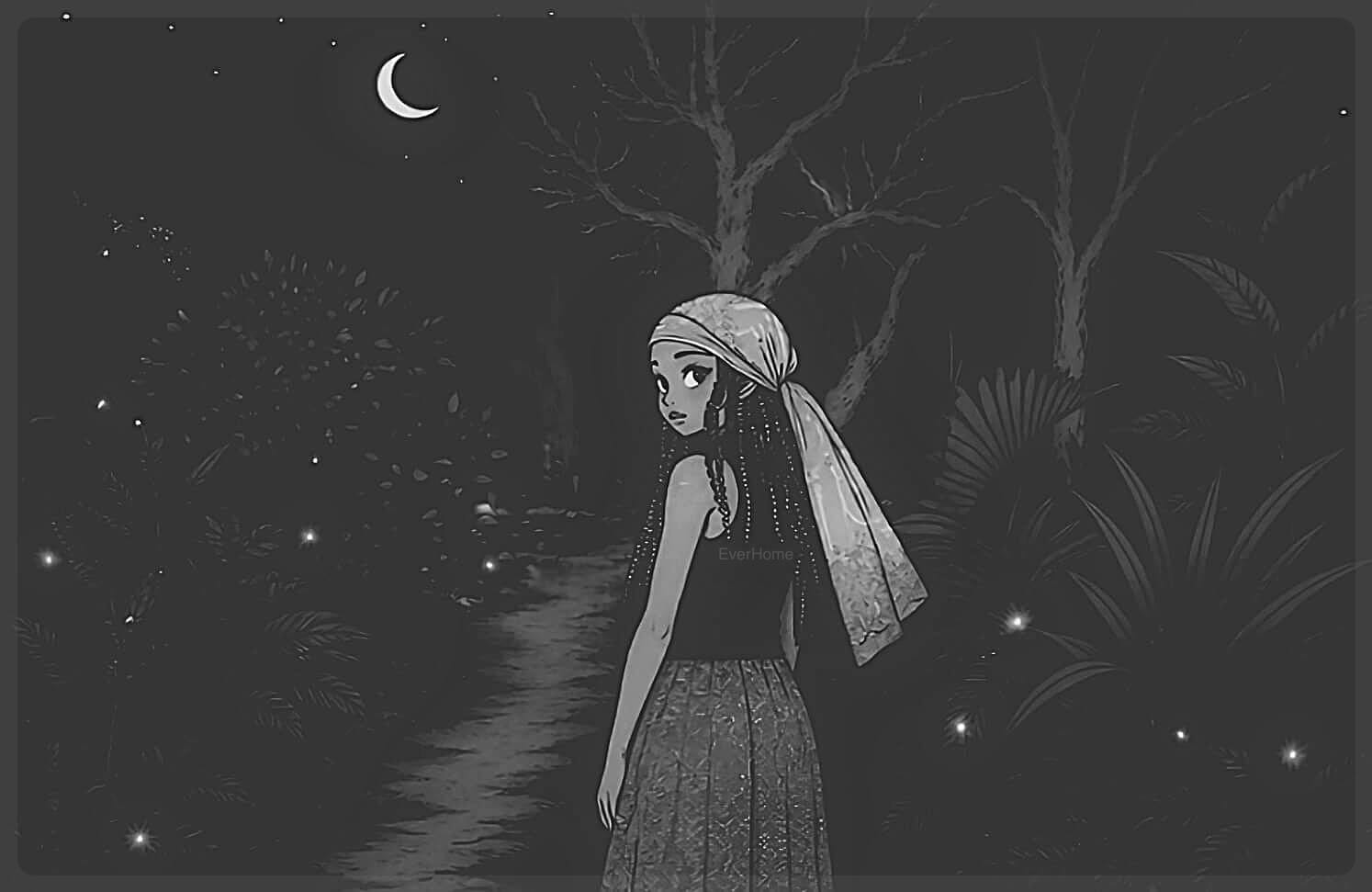
These experiences sent me deep into the woods, both psychologically and literally.
I would escape into nature — to climb trees, sit beside the water, and follow the most tucked-away trails and mountain paths, searching for places where other human beings were nowhere in sight. The need for silence, solitude, and separation from environments that did not fit me far surpassed any thought of whether it was safe to be alone out there.
On the contrary, the farther away I could get, the safer I felt. The people I found myself surrounded by and the places that made up my everyday surroundings felt like the real danger. The trees, meanwhile, held me in a way the world around me could not. So I chose the trees.
To this day, I still choose the trees.
By that, I mean moving toward what is capable of sustaining me: vegetation, water, silence, and physical landscapes that provide the conditions for a deeper sense of grounding, ease, and natural existence.
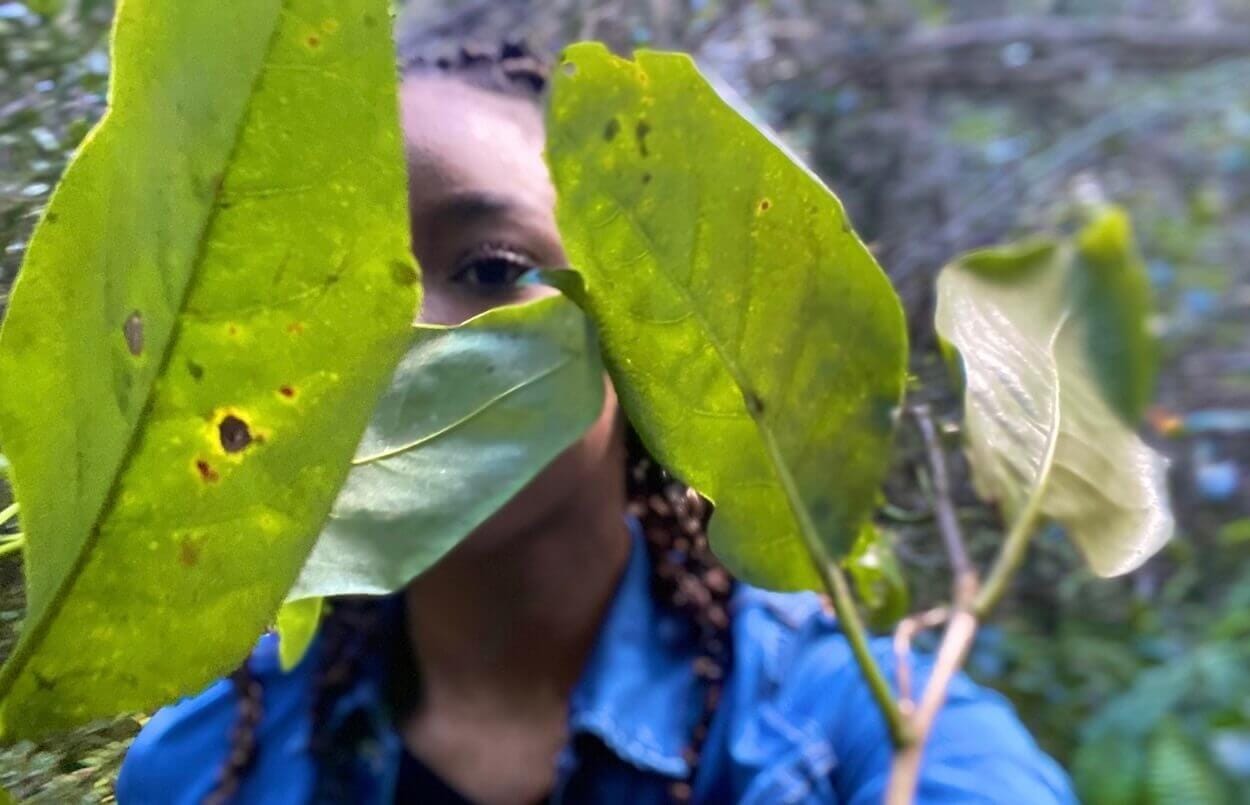

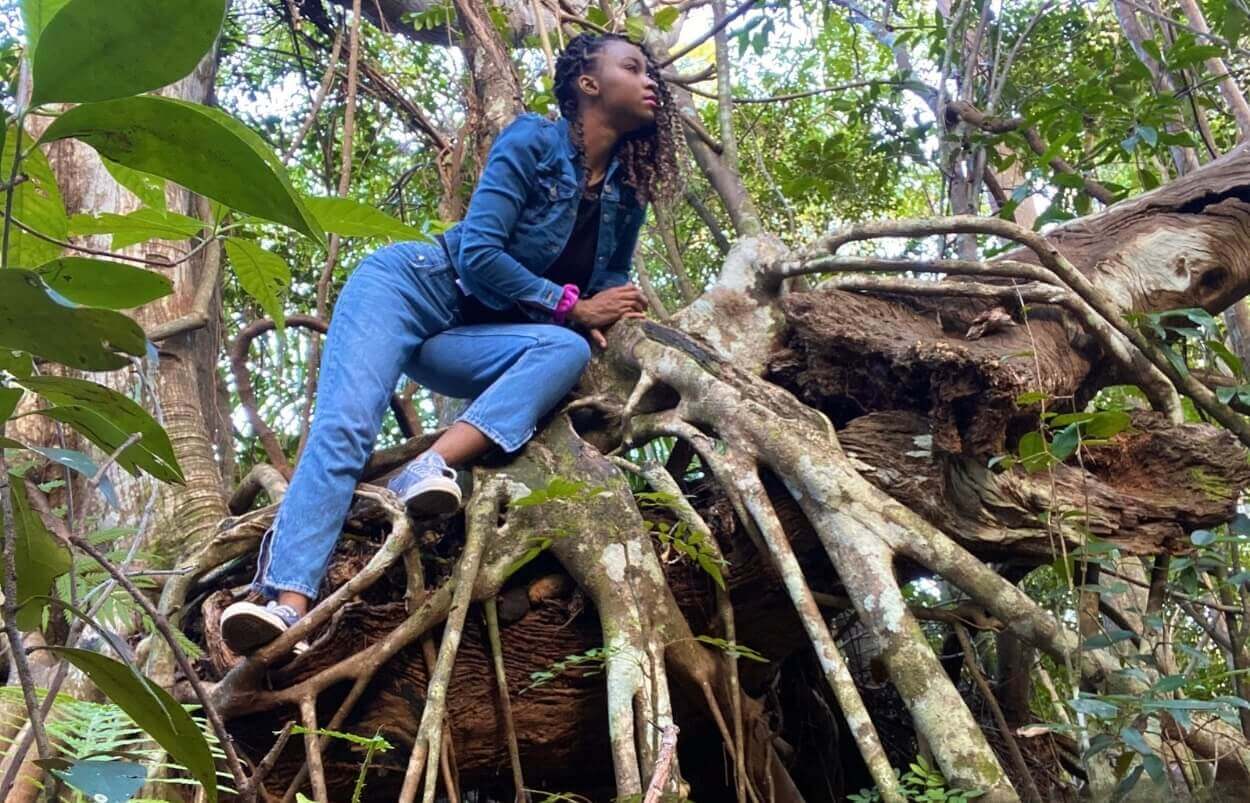
(Self-portraits, naturally — because having someone with me would undo the very reason I went.)
Belonging: A Sustainability Issue
Experiencing a lack of belonging deepened my awareness of the relationship between our surroundings and our ability to feel rooted, connected, and supported. It also transformed how I came to understand sustainability, extending it beyond preserving environments and ensuring their long-term resilience to asking whether those spaces enable the beings within them to live well and genuinely thrive. Even if a structure functions as it was designed to and endures over time, there is something fundamentally unsustainable about members of the community within it feeling alienated, remaining perpetually outside of belonging, or continually contorting themselves or disconnecting from parts of who they are simply to remain within it.
This perspective reflects the concept of social sustainability, which considers the human dimensions of sustainable development through principles of inclusion, social cohesion, equitable access, community connection, and quality of life. It also broadens the conversation beyond inclusion by asking whether an environment creates the conditions for people to remain meaningfully themselves and contribute from the fullness of their capacities.
A socially sustainable structure does not depend on people continually suppressing the qualities that may carry some of their greatest potential for contribution. Rather, it provides space for individuals to preserve the integrity of who they are and bring forward their particular combination of perspectives, sensitivities, abilities, creativity, and cultural experiences. These conditions allow their most significant capacities to emerge.
An individual’s capabilities, then, cannot be understood entirely apart from the context in which they are expressed. Someone may appear disengaged, limited, or unsuccessful in one place while becoming extraordinarily generative in another — not because the person has fundamentally changed, but because the second place provides conditions in which previously constrained qualities can finally surface. Through this lens, thriving involves a genuine degree of compatibility between an individual and the environment they inhabit.
The deepest sense of belonging arises when the individual is offered sufficient room, support, and possibility for their distinctive qualities to take root, develop, and find their fullest expression.